While testosterone replacement therapy (TRT) can be highly effective for treating low testosterone, it’s essential to be aware of potential risks and side effects.
Understanding these potential complications can help men make informed decisions about treatment and work closely with their healthcare providers to minimise risks.
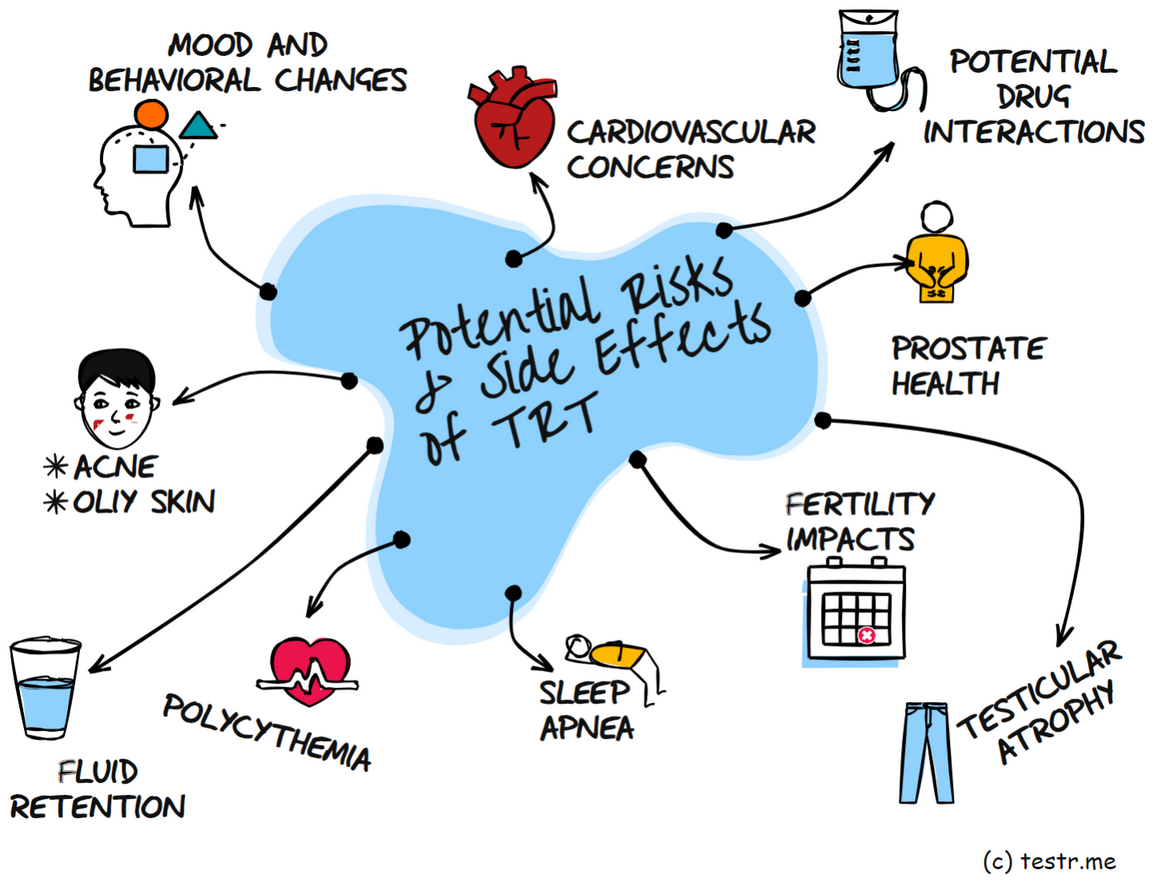
Cardiovascular Concerns
The relationship between TRT and cardiovascular health is complex:
- Some studies suggest a potential increased risk of heart attacks and strokes
- Other research indicates possible cardiovascular benefits in certain populations
- Individual risk factors like age, overall health, and pre-existing conditions play a role
- Close monitoring of cardiovascular health is essential during TRT
Discussing personal cardiovascular risk with a healthcare provider is crucial before starting treatment.

Prostate Health
Testosterone’s effects on the prostate are a key consideration:
- TRT may cause prostate enlargement and worsening of urinary symptoms
- There’s ongoing debate about the potential link between TRT and prostate cancer risk
- Regular prostate exams and PSA testing are typically recommended during treatment
- Men with a history of prostate cancer may not be candidates for TRT
Careful monitoring of prostate health is an important aspect of TRT management.
Fertility Impacts
TRT can significantly affect male fertility:
- Exogenous testosterone suppresses natural sperm production
- This effect is usually reversible but may take months to years to normalize
- Alternative treatments like hCG or clomiphene may be preferred for men planning to have children
- Sperm banking before starting TRT is an option for those concerned about future fertility
Discussing fertility goals with a healthcare provider is essential before initiating treatment.
Sleep Apnea
TRT may exacerbate or unmask sleep apnea:
- Some men experience worsening of existing sleep apnea symptoms
- TRT can sometimes reveal previously undiagnosed sleep apnea
- Regular screening for sleep apnea symptoms is important during treatment
- CPAP or other sleep apnea treatments may need to be adjusted
Monitoring sleep quality and addressing any breathing issues is crucial during TRT.
Polycythemia
Testosterone can stimulate red blood cell production, potentially leading to polycythemia:
- Elevated red blood cell counts can increase the risk of blood clots
- Regular monitoring of hematocrit levels is necessary during TRT
- Dose adjustments or therapeutic phlebotomy may be needed to manage this side effect
- Staying well-hydrated and avoiding smoking can help mitigate risk
Close monitoring of blood counts is an important aspect of TRT safety.
Acne and Oily Skin
Some men experience skin changes with TRT:
- Increased oil production can lead to acne outbreaks
- This side effect is often more pronounced in younger men
- Topical treatments or adjustments to TRT dosing may help manage skin issues
- Most skin-related side effects improve with time or dose optimization
Good skincare practices can help minimize these cosmetic concerns.

Mood and Behavioral Changes
TRT can impact mood and behaviour in some individuals:
- Most men experience improved mood and reduced irritability
- However, some may experience increased aggression or mood swings
- Rarely, manic symptoms can occur in men with bipolar disorder
- Open communication with healthcare providers about mood changes is important
Regular assessment of mental health and well-being is crucial during TRT.
Testicular Atrophy
Long-term TRT can lead to shrinkage of the testicles:
- Suppression of natural testosterone production can cause testicular volume reduction
- This effect is usually reversible if TRT is discontinued
- Some men find this side effect distressing from a cosmetic standpoint
- Concurrent use of hCG can help maintain testicular size in some cases
Discussing concerns about testicular size with a healthcare provider can help address this issue.
Fluid Retention
Some men experience mild fluid retention with TRT:
- This can lead to swelling in the ankles or feet
- Weight gain due to fluid retention may occur
- Adjusting TRT dosing or formulation can often alleviate this side effect
- Severe or persistent edema should be evaluated promptly
Monitoring for signs of fluid retention is part of ongoing TRT management.
Potential Drug Interactions
TRT can interact with certain medications:
- Blood thinners like warfarin may require dose adjustments
- Corticosteroids and TRT may have additive effects on fluid retention
- Some medications can affect how the body processes testosterone
- A comprehensive medication review is important before starting TRT
Keeping healthcare providers informed about all medications and supplements is crucial for safe treatment.
And Finally…
By understanding these potential risks and side effects, men considering or undergoing TRT can work closely with their healthcare providers to maximise benefits while minimising potential complications. Most of us have no side effects, but regular monitoring, open communication, and individualised treatment approaches are key to safe and effective treatment.


